Heat Pump for a Seattle Craftsman With No Ductwork
Can a Seattle Craftsman get a heat pump without ducts? Mogovolt shares ductless mini-split options, winter comfort, installation costs and planning tips.

Can a 1920s Seattle Craftsman get a heat pump when there's no ductwork?
Yes. Last month we walked a 1924 Craftsman in Wallingford that has never had a duct in it. The owner heats with old electric baseboards and one gas wall furnace that warms the living room and not much else. Every October she has the same argument with herself: put in a heat pump, or live with cold bedrooms for another winter.
Her questions are the ones we hear from almost every older-home owner in Seattle, so here they are, with the answers we gave her.
Do I have to add ductwork?
No. This was her biggest worry, because adding ducts to a plaster-and-lath house with a tight attic and a crawlspace means tearing into walls. The answer is a ductless mini-split heat pump: one outdoor unit, and indoor units ("heads") in the rooms you want heated. Each head connects to the outdoor unit through a refrigerant line about the size of a garden hose, which runs through a 3-inch hole in the wall.
For a typical Seattle Craftsman, that means two to four heads: one in the living room, one in each upstairs bedroom, and sometimes a slim ceiling or floor unit for the dining room. No ducts, no soffits, and no walls opened up.
Will it actually keep the house warm in January?
Yes, and this is where Seattle works in our favor. Our winters are wet and gray, but rarely bitter. Seattle averages lows in the mid-30s in January, and nights below 20°F are uncommon. Modern cold-climate mini-splits are rated to keep full heating output down to about 5°F, and many still run at -13°F. We never get close to that.
Her real concern was that the old baseboards are so slow the family wakes up cold. A heat pump is the opposite problem: it runs quietly and almost constantly at low speed, so the room holds a steady temperature instead of swinging. Our advice is to set it and leave it, not to turn it off at night like a furnace. That feels strange to most people, but it is how heat pumps are designed to run efficiently.
Is a white plastic box going to ruin my Craftsman?
This one bothered her more than anything. She spent years restoring the fir trim and the built-ins and did not want a wall unit sitting above the picture rail.
What we showed her:
- Wall heads are the cheapest and most efficient, but they can usually sit high on an interior wall, above a doorway or in a corner, where they fade into the background.
- Floor-mounted heads look like a small radiator and sit under a window. They suit older homes well and are our pick for her living room.
- Ceiling cassettes disappear into the ceiling if you have attic access above, which most Craftsmans do.
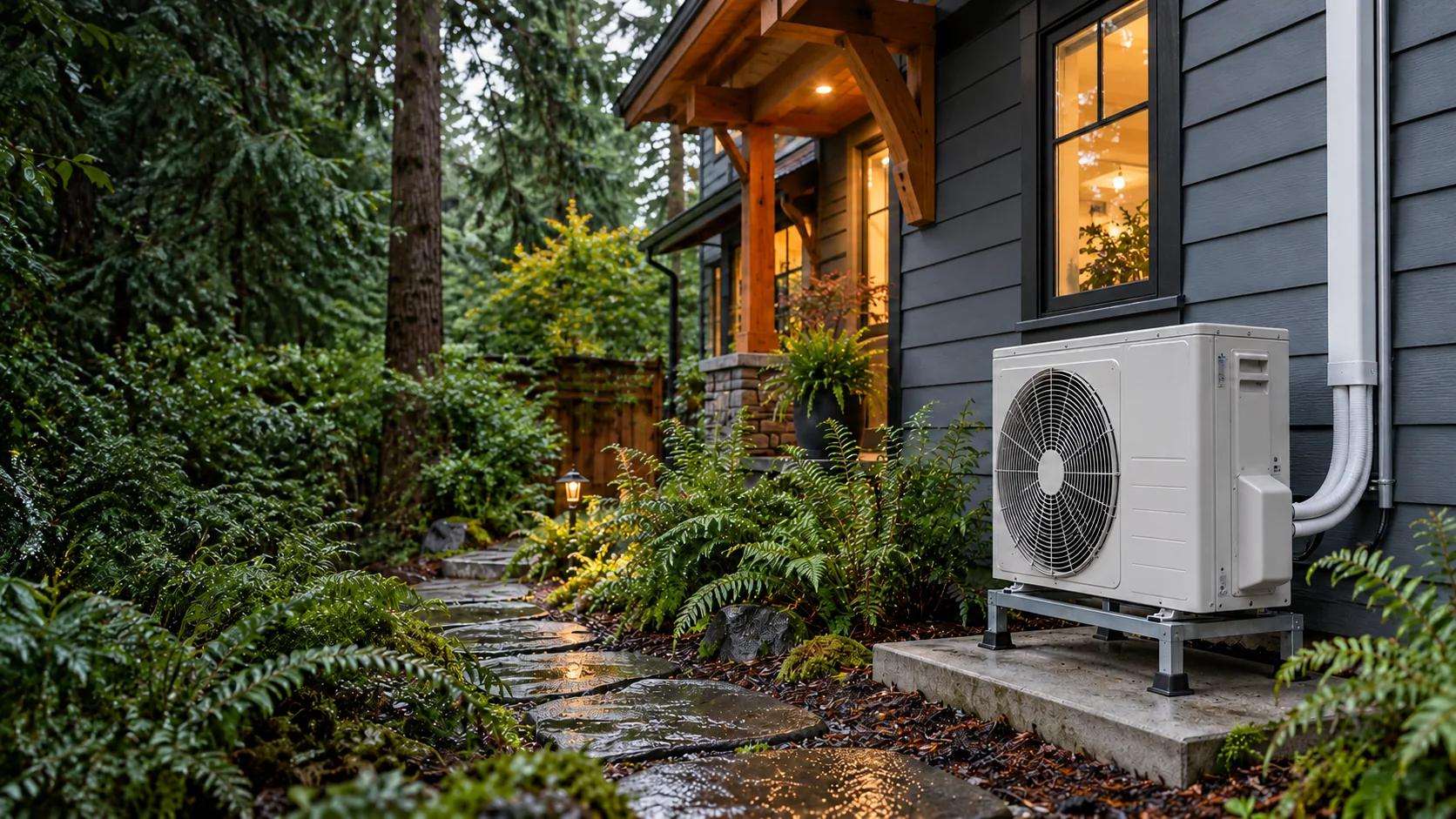
- The outdoor unit goes on the side or back of the house, on a pad or wall bracket, with the line set run inside a paintable cover so it blends with the siding.
Historic districts and exterior changes
If your house is in a Seattle historic district or on a landmark list, exterior changes may need review. Hers isn't, but it's worth a quick check before you commit.
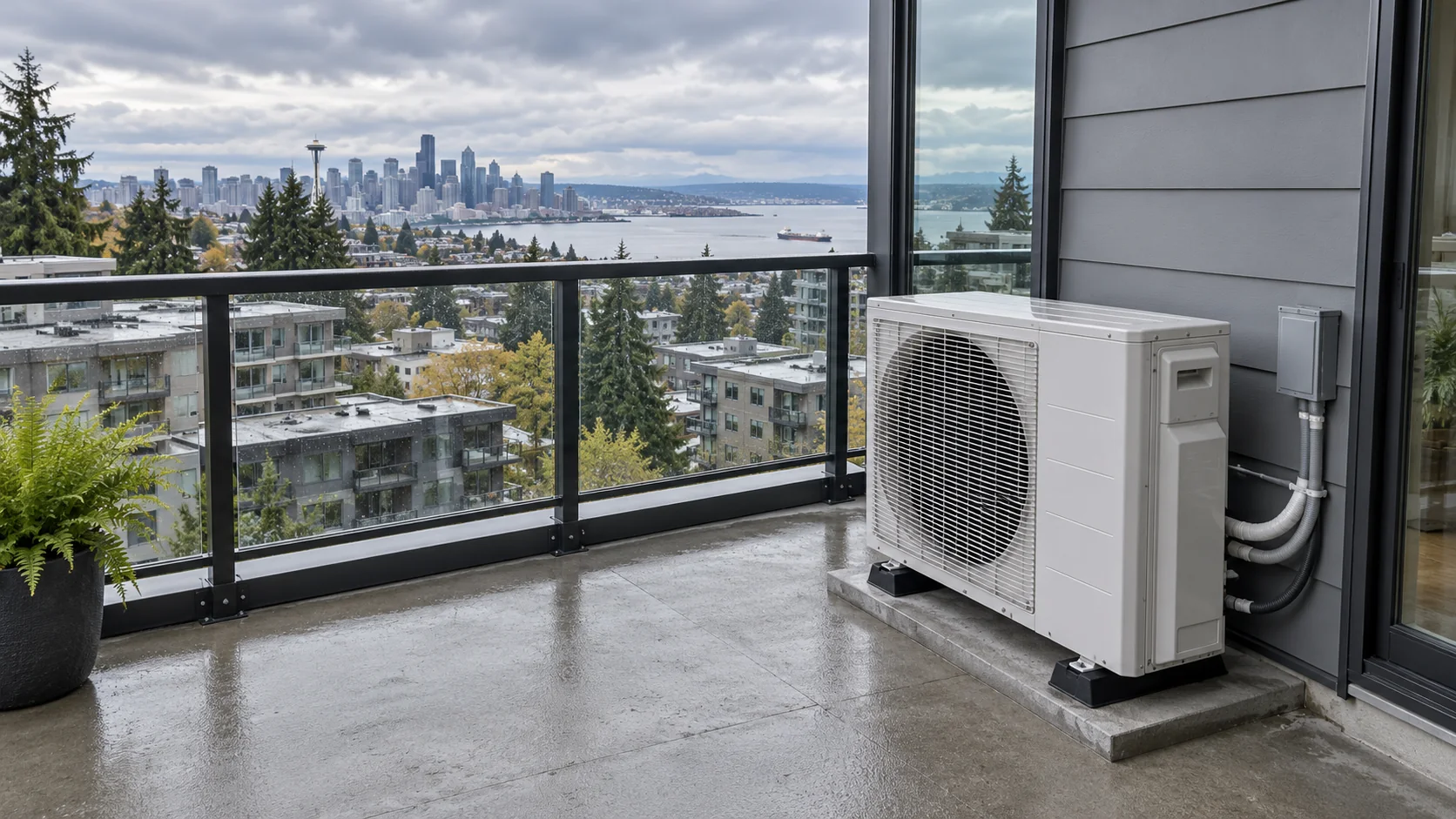
Condo owners face a different approval process for exterior equipment; our Seattle condo heat pump guide covers HOA rules and balcony placement.
My wiring is old and my walls aren't insulated. Is that a problem?
It's a conversation, not a deal-breaker. Two things came up on the walkthrough:
Electrical. Many older Seattle homes still have a 100-amp panel, and some have knob-and-tube in the walls. A multi-zone mini-split typically needs its own 20- to 40-amp breaker. She had space on her panel, so it's a simple new circuit. If you don't, a panel upgrade is the usual fix, and it often pays for itself when you later add an EV charger or induction range.
Insulation. Her walls are empty and the attic has a thin layer of 1970s batts. A heat pump sized for the house as it stands will work, but you'll pay for heat that leaks out. Blowing in attic insulation first is the best money an older-home owner can spend, because it lets us install a smaller, cheaper system. Ask for a proper load calculation (Manual J) rather than a rule of thumb; an oversized heat pump short-cycles and costs more to run.
What does a ductless heat pump cost for an older Seattle home?
For a breakdown of installed prices by zone, labor, and rebates, see our Seattle ductless mini split cost guide.
Ductless systems in Seattle typically run from about $4,500 for a single-zone system to $14,000 to $18,000 for a three- or four-zone cold-climate setup, before incentives. Attic insulation and any electrical work are on top of that. Those are approximate; your house and the number of heads drive the price more than anything.
What brings the number down:
- Utility rebates from Seattle City Light or Puget Sound Energy, depending on who serves your address, with larger amounts if you're replacing oil or electric resistance heat.
- Washington State and federal incentives for heat pumps, which change year to year, so ask the installer what's current when you get your quote.
- Replacing baseboard electric. Heating bills drop noticeably the first winter, because a heat pump moves heat instead of making it and uses roughly a third of the electricity for the same warmth.
Cooling in summer, too
And a bonus she hadn't thought about: every head also cools. After the last few August heat waves, that alone sold her.
Where she landed
A three-zone ductless heat pump, floor unit in the living room, wall heads in the two bedrooms, attic insulation first. No demolition, steady heat through the damp months, cooling in summer, and a real cut to the power bill. The decisions that mattered were head placement, insulation, and a correct load calculation.
If you're weighing the same thing for your Seattle Craftsman or older home, Mogovolt Heating & Cooling does free in-home assessments across Seattle and the Eastside, including a load calculation and a look at your panel. Use the Calculate Your Savings tool on this site to see what a heat pump would do to your bill, or reach out and we'll walk the house with you.